Saltwater fishing puts more demands on small tools than many anglers realize. A pair of fishing scissors may spend the morning cutting braided line on a boat, sit on a wet deck between catches, and then end up in a tackle bag with salt residue still on the blades. After repeated trips, ordinary scissors can develop rust spots, stiff joints, or cutting problems that make them less pleasant to use.
Choosing the best rustproof fishing scissors for saltwater fishing is not simply a matter of finding a product labeled stainless steel or corrosion-resistant. Blade material matters, but so do the pivot, fasteners, blade alignment, cutting geometry, and the way the scissors are maintained. A rust-resistant blade is of limited value if the joint corrodes or the scissors struggle to cut the fishing line you use most often.
Ceramic fishing scissors are worth considering, particularly when resistance to blade corrosion and edge wear are important priorities. Zirconia ceramic blades offer a different balance of properties from stainless steel: they are highly resistant to corrosion and can retain a sharp edge, but they are also more brittle and require sensible handling.
This guide explains what to look for in saltwater fishing scissors, compares ceramic and stainless steel blades, and covers the practical details that matter before you buy. It also outlines what fishing tackle brands, distributors, and private-label businesses should evaluate when sourcing ceramic fishing scissors for their own product ranges.
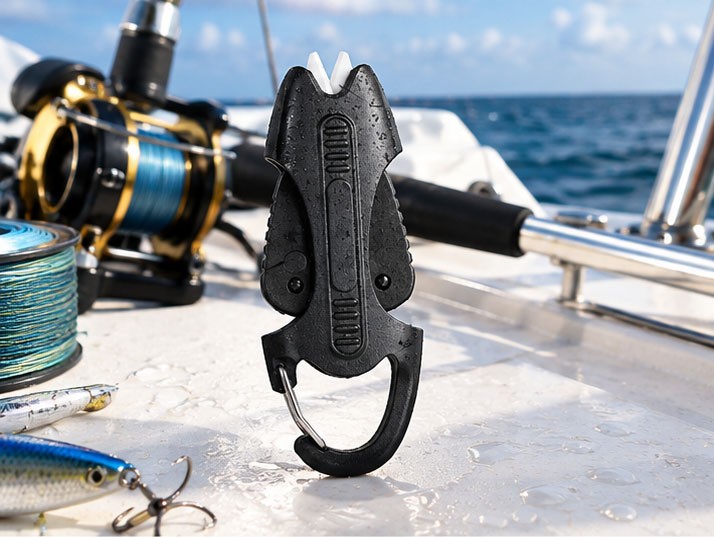
Why Saltwater Fishing Requires Rust-Resistant Scissors
Fishing tools used around the sea face a combination of moisture, salt deposits, and frequent handling. Even a small pair of scissors can be exposed to these conditions several times during a single trip. The problem is not always obvious straight away. Corrosion may begin around a screw or pivot before it becomes noticeable on the cutting blades.
How Saltwater and Humidity Affect Fishing Scissors
Seawater contains chloride ions, which can make corrosion more challenging for many metals. Salt residue left on a tool can attract moisture and create conditions that encourage corrosion, particularly when the tool is stored in a closed tackle bag before it has dried.
The results depend on the metal, its surface condition, the design of the tool, and how it is used. Some stainless steels resist corrosion much better than ordinary carbon steel, but stainless steel is not completely immune to corrosion in every marine environment. Scratches, deposits, crevices, and prolonged exposure to chloride-rich moisture can all affect performance.
For fishing scissors, corrosion can cause more than an unattractive surface. A damaged cutting edge may perform poorly, while corrosion around the pivot can make the blades harder to open and close. If the blades no longer meet correctly, cutting thin fishing line can become frustrating.
These issues are especially relevant to anglers who fish offshore, make frequent boat trips, or use their scissors in wet conditions throughout the year. They may not have time to clean every tool immediately after each cut, so choosing suitable materials and a practical design becomes more important.
Why Blade Material Is Only Part of the Equation
A pair of scissors is made from several components, and they may not all use the same material. The blades might be stainless steel or zirconia ceramic, while the pivot, screws, springs, and other structural parts contain metal components with different corrosion characteristics.
This distinction matters when evaluating products advertised as rustproof fishing scissors. A ceramic blade does not rust like an iron-based steel blade, but that does not mean every metal component in the product is corrosion-proof. Likewise, a stainless steel pair may offer good overall corrosion resistance when the correct grade and construction are used.
Look at the whole tool rather than relying on a single label. Consider how the blades are joined, whether the pivot is exposed to saltwater, whether the construction feels secure, and whether the manufacturer provides clear care instructions. For commercial buyers, asking for the material specifications of the complete product is a sensible starting point.
What Makes Fishing Scissors Truly Rustproof?
The term rustproof is widely used in product descriptions, but it can mean different things. For a buyer, the useful question is how well the scissors resist corrosion under their intended conditions. No product should be assumed to withstand every marine environment indefinitely without care.
Corrosion Resistance of the Blade Material
Zirconia ceramic is an important option for scissors designed around corrosion resistance. Unlike iron-based steel, a zirconia ceramic blade does not develop conventional iron rust. It is also highly resistant to many forms of chemical corrosion, which makes the material attractive for tools exposed to moisture and salt residue.
Stainless steel remains a practical choice for many fishing tools. Its corrosion resistance depends on the specific grade, processing, surface finish, and conditions of use. A well-designed stainless steel tool may perform very well in marine applications, but it should not be treated as completely maintenance-free.
When comparing the two, focus on the intended use rather than assuming that one material wins in every category. Ceramic offers a strong advantage in blade corrosion resistance and hardness. Stainless steel generally offers greater toughness and can be more forgiving when tools are dropped or subjected to rough handling.
Check the Pivot, Screws, and Other Metal Components
The pivot is one of the most important parts of a pair of scissors. It holds the blades together and helps maintain their alignment during cutting. If the joint becomes stiff or develops excessive play, even a sharp blade may not cut fishing line cleanly.
Before buying saltwater fishing scissors, inspect the pivot and visible fasteners. Ask what materials are used where corrosion is most likely to occur. If the scissors include a spring, clip, or other metal accessory, check whether those parts have been considered for the intended environment.
This is particularly important for fishing tackle brands and distributors. A product may have an attractive ceramic blade specification, but the complete design still needs to meet the expectations of the end user. Material details should be confirmed with the supplier instead of inferred from the appearance of the product.
Construction Quality and Maintenance Requirements
Good construction should allow the scissors to open and close smoothly without excessive looseness or resistance. The blades should meet consistently, and the handles should feel secure during normal use. These details affect the user experience just as much as the headline material specification.
Maintenance also remains relevant. Rinsing away salt residue, drying the scissors, and following the manufacturer's instructions can help protect exposed metal components and preserve the condition of the tool. Rust-resistant does not automatically mean maintenance-free, even when the cutting blades are ceramic.
For buyers evaluating multiple products, a practical assessment should include repeated opening and closing, inspection of blade alignment, and cutting tests with the fishing lines the product is intended to handle. Testing the complete scissors provides more useful information than judging the blade material alone.
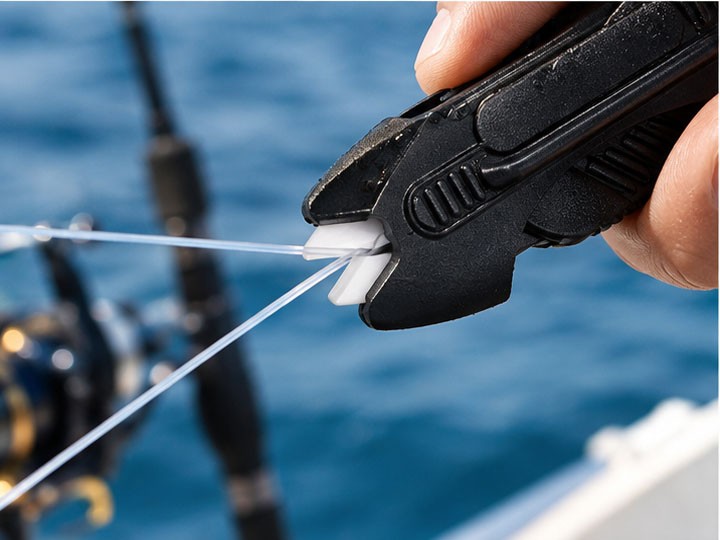
Ceramic vs. Stainless Steel Fishing Scissors for Saltwater Use
Ceramic and stainless steel fishing scissors can both have a place in a saltwater tackle kit. The better choice depends on the balance of corrosion resistance, toughness, cutting performance, price, and intended use. Understanding these trade-offs makes it easier to select a tool that suits your fishing style rather than choosing on one feature alone.
| Evaluation Factor | Zirconia Ceramic Blades | Stainless Steel Blades |
|---|
| Blade rust resistance | The ceramic blade itself does not develop conventional iron rust. | Resistance depends on the steel grade, finish, and exposure conditions. |
| Hardness | Very high hardness is a key material characteristic. | Varies with the steel grade and heat treatment. |
| Edge wear resistance | Can provide good wear resistance when properly manufactured. | Depends on the steel, heat treatment, and edge design. |
| Impact tolerance | More brittle and less tolerant of impact or twisting. | Generally tougher and more forgiving under rough handling. |
| Maintenance | The blade needs little concern about conventional rust, but other components still need care. | Cleaning and drying help reduce corrosion risk, especially after saltwater use. |
| Cutting performance | Depends on blade geometry, alignment, and the type of fishing line. | Also depends on blade geometry, alignment, and manufacturing quality. |
| Potential best fit | Users prioritizing blade corrosion resistance and edge wear resistance. | Users prioritizing toughness, versatility, or a particular price point. |
When Ceramic Fishing Scissors Are the Better Choice
Ceramic fishing scissors are worth considering when blade corrosion is a recurring concern. Anglers who regularly fish in saltwater may appreciate a cutting edge that does not develop conventional iron rust. Zirconia ceramic is also a hard material with good wear-resistance potential, which can be useful for a compact cutting tool used repeatedly over time.
The benefits depend on the finished product, however. Blade sharpness, edge geometry, alignment, and the construction of the scissors still influence how well they cut. Ceramic should not be selected solely because the material is hard; the product needs to be designed for the fishing lines and conditions in which it will be used.
Handling is another consideration. Ceramic blades are less tolerant of impact and twisting than many metal blades. They are designed for cutting, not prying, scraping, or forcing through unsuitable materials. Anglers who treat their tools carefully may find this trade-off reasonable, while those who routinely drop or misuse their scissors may prefer a tougher metal option.
When Stainless Steel Fishing Scissors May Be More Suitable
Stainless steel can be the more practical choice when toughness and versatility are priorities. Metal blades generally tolerate impact and bending forces better than ceramic blades. For users who need a tool for a wider range of tasks, this difference may outweigh the ceramic blade's corrosion-resistance advantages.
Price and product positioning also matter. Stainless steel covers a wide range of grades and manufacturing approaches, so it is not accurate to treat every stainless steel scissor as equivalent. A well-made product using a suitable steel grade may be a sensible choice for frequent saltwater use, provided it receives appropriate care.
For fishing brands and distributors, the comparison should be based on the target customer. A premium product focused on blade corrosion resistance may benefit from a ceramic option. A general-purpose line aimed at rough handling or broad utility may be better served by a suitably specified metal product. The right choice is the one that fits the application and customer expectations.
What Else Should You Look for in Saltwater Fishing Scissors?
Rust resistance is an important starting point, but it should not be the only reason to choose a pair of fishing scissors. The tool still needs to cut your fishing line reliably, feel comfortable in the hand, and hold up to normal use around the water. A corrosion-resistant blade that slips across braided line or struggles with the line diameter you use most often will not be much help on a fishing trip.
Clean Cutting Performance for Different Fishing Lines
Different fishing lines behave differently under a cutting edge. Braided PE line is made from multiple fine fibers, so the fibers can flatten, spread, or slip when the blades do not engage them properly. The cutting result depends on blade sharpness, geometry, alignment, and how the line is positioned between the blades.
Monofilament line has a different structure. A suitable pair of scissors should cut the intended diameter cleanly without excessive crushing or leaving a ragged end. Fluorocarbon line also requires consideration of its particular stiffness and diameter. A scissor that works well on thin nylon line may not produce the same result with thicker fluorocarbon.
For this reason, do not assume that every ceramic fishing scissor performs equally well on PE braid, monofilament, and fluorocarbon. Check the manufacturer's stated applications and, where possible, test the exact model with the line types and diameters you use. For commercial buyers, representative cutting tests are more useful than a general claim that a product cuts all fishing lines.
For more detailed guidance on braid, see our guide to choosing fishing scissors for braided PE line.
Blade Geometry and Edge Design
Blade material is only one part of cutting performance. The shape of the cutting edges, their alignment, and the way the blades meet can have a noticeable effect on the finished cut. Two scissors made from the same material may perform differently because their blade geometry and manufacturing tolerances are not the same.
Straight edges can work well for many everyday cutting tasks, while serrated edges may help engage flexible fibers in certain designs. However, serrations are not automatically better for every fishing line. The spacing, depth, and shape of the teeth matter, as does the overall design of the scissors.
With ceramic blades, careful manufacturing and handling are especially important. Zirconia ceramic is hard, but it is less tolerant of impact and twisting than many metal materials. The goal is a well-designed cutting edge that suits the intended application, not simply the hardest possible material.
Grip, Portability, and On-Boat Convenience
Fishing scissors are often used with wet hands, in limited space, or while an angler is handling other equipment. Handles should feel secure and allow the user to control the blades without unnecessary effort. A compact design can also be useful when space in a tackle box or fishing vest is limited.
Consider how the scissors will be carried and stored. A hanging clip, lanyard attachment, or other retention feature can be helpful if it is included in the design. These details should be checked against the actual product specification rather than assumed from photographs or general descriptions.
Portability should not come at the expense of safe handling. The blades should be protected during storage, and the scissors should be easy to retrieve without accidentally contacting the cutting edge. For boat fishing, a practical design is one that can be carried securely and used without getting in the way of other tasks.
Durability and Proper Handling
Durability means more than resistance to rust. It also includes how well the blades retain their alignment, how securely the pivot holds the scissors together, and whether the handles and other components remain reliable through normal use.
Ceramic blades require particular care. Avoid dropping the scissors onto a hard surface, twisting the blades sideways, or using them as a pry tool. Do not force them through materials outside the manufacturer's recommended applications. High hardness and good wear resistance do not make ceramic immune to chipping or fracture.
After saltwater use, remove salt residue and dry the scissors according to the manufacturer's care instructions. Check the joint for smooth movement and look for signs of damage before the next trip. These simple habits help preserve the condition of the complete tool, including any metal components that may still be exposed to corrosion.
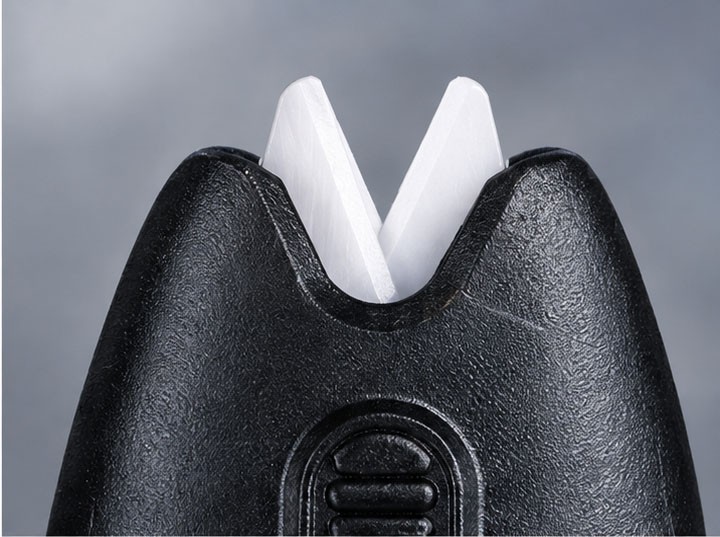
How to Choose the Best Rustproof Fishing Scissors for Your Fishing Style
The best choice depends on where you fish, which lines you cut, and how you handle your equipment. Instead of looking for a single product that claims to suit every situation, start with your most common use case and compare the features that matter for it.
For Offshore and Boat Fishing
Offshore and boat fishing can expose tools to repeated splashes, salt residue, and humid storage conditions. Give priority to blade corrosion resistance, the materials used in the pivot and fasteners, and a construction that remains easy to operate. A compact design with a secure storage solution can also be useful when deck space is limited.
Zirconia ceramic blades are worth evaluating if reducing blade rust concerns is a priority. Still, the whole pair of scissors should be assessed, particularly if metal components are exposed to the marine environment. Rinsing and drying the tool after use remain sensible practices.
For Coastal and Everyday Saltwater Fishing
For regular shore fishing, convenience often matters as much as material choice. Scissors should be easy to carry, comfortable to use, and suitable for the fishing lines most often found in your tackle setup. A corrosion-resistant blade can be a useful advantage when the tool is frequently exposed to sea spray or damp equipment.
Consider how often you cut line, whether you need a compact pair of scissors, and how much maintenance you are willing to perform. A well-designed tool that fits your normal routine is usually a better choice than a product selected on a single headline specification.
For Anglers Who Frequently Cut Braided PE Line
If braided PE line is your main application, pay particular attention to how the blades engage the fibers. A sharp, well-aligned cutting edge is essential, and some designs may provide better grip on flexible braid than others. Ceramic material alone does not guarantee a clean cut.
When comparing models, test the actual line you use rather than relying only on a demonstration with an unspecified diameter. Check whether the scissors can make a clean cut without repeated squeezing or excessive force. If you also use monofilament or fluorocarbon, test those materials separately.
You can also read our guide to ceramic scissors for fluorocarbon fishing line for a closer look at that specific application.
For Fishing Brands and Private-Label Buyers
Commercial buyers need to evaluate a product from a slightly different perspective. The scissors must work for the intended end user, but they also need to fit the brand's positioning, target price, packaging requirements, and quality expectations.
Before selecting a supplier, confirm the blade material, the materials used in the complete assembly, the intended fishing-line applications, and the available product specifications. Ask how samples can be evaluated and what quality checks are performed before shipment. If the scissors are intended for a private-label range, discuss branding, packaging, and any feasible design customization before committing to a production order.
It is also worth considering the product's place in your wider tackle range. A ceramic fishing scissor may offer a distinct material story for customers who value blade corrosion resistance. That positioning is more credible when supported by clear specifications, representative testing, and accurate descriptions of what the product can and cannot do.
Why Consider MIDDIA Ceramic Fishing Scissors for Saltwater Applications?
For anglers and fishing tackle businesses looking beyond conventional metal-blade options, MIDDIA ceramic fishing scissors offer a product category worth evaluating. Zirconia ceramic is known for its high hardness and resistance to corrosion, making it relevant to applications where blade rust and edge wear are important considerations.
The practical value, however, comes from the finished product rather than the material name alone. Blade geometry, cutting-edge quality, alignment, handle design, and the construction of the pivot all affect the user experience. Buyers should evaluate these details against the fishing lines and conditions for which the scissors are intended.
Zirconia Ceramic Blades for Corrosion-Sensitive Applications
Unlike iron-based steel blades, zirconia ceramic blades do not develop conventional iron rust. This characteristic can be attractive to anglers who regularly use their scissors around seawater. Ceramic's hardness and wear-resistance potential are additional considerations, although actual performance depends on the design and quality of the finished blade.
It is important to distinguish the blade's properties from those of the complete scissors. Exposed metal components may still require care, and ceramic blades should be protected from impact and inappropriate sideways force.
Fishing-Line Cutting Applications
Fishing tackle products need to perform reliably in their intended applications. When evaluating MIDDIA ceramic fishing scissors, consider the model's suitability for braided PE line, monofilament, or fluorocarbon based on the actual product specification and cutting tests.
For brands and distributors, confirming these details helps create more accurate product listings and reduces the risk of setting expectations the product cannot meet. It also provides a clearer basis for selecting the right model for a particular customer segment.
OEM and ODM Options for Fishing Tackle Brands
MIDDIA works in the ceramic cutting-tool category and can discuss potential OEM and ODM opportunities for businesses developing fishing tackle products. Depending on the product and manufacturing requirements, discussions may cover branding, packaging, appearance, handle color, and other feasible customization options.
For fishing tackle brands, distributors, wholesalers, Amazon sellers, fishing line brands, and trading companies, the first step is to define the target market and intended application. Share the specifications you need, the types of fishing line the scissors should handle, your branding requirements, and your expected order volume. This gives the manufacturer a clearer basis for discussing product suitability, samples, and a potential supply arrangement.
If you are developing a private-label fishing tool range, you can contact MIDDIA to discuss your ceramic fishing scissors project.
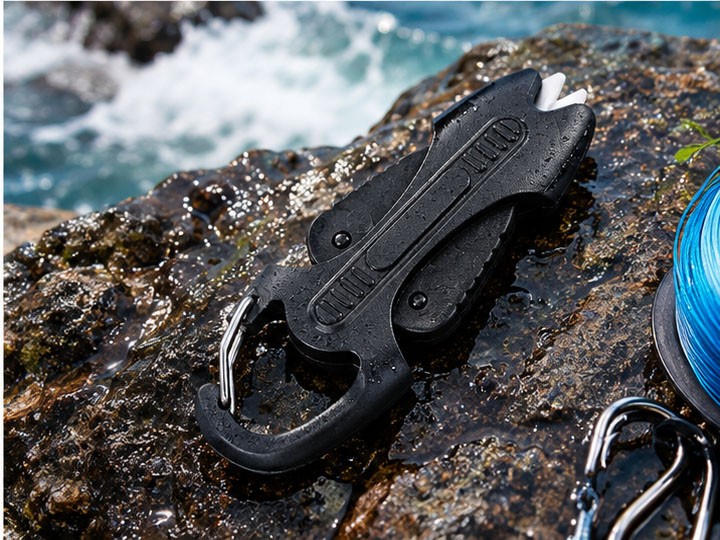
Frequently Asked Questions About Rustproof Fishing Scissors
Q1. What Are the Best Rustproof Fishing Scissors for Saltwater Fishing?
The best choice depends on your fishing conditions, the lines you cut, and the construction of the complete tool. Look for a corrosion-resistant blade, a well-designed pivot, suitable cutting geometry, and clear maintenance guidance. Ceramic-blade scissors are worth considering when blade corrosion resistance is a major priority, while a suitable stainless steel model may be preferable when toughness is more important.
Q2. Are Ceramic Fishing Scissors Better Than Stainless Steel for Saltwater?
Ceramic blades offer a strong advantage in resistance to conventional rust and can provide good edge wear resistance. Stainless steel blades generally offer greater toughness and may be more forgiving under impact. Neither material is automatically better for every application. The right choice depends on the product design, fishing-line requirements, handling conditions, and budget.
Q3. Do Ceramic Fishing Scissors Rust in Saltwater?
Zirconia ceramic blades do not develop conventional iron rust. However, a pair of ceramic fishing scissors may contain metal components such as pivots, screws, or springs. These parts can have different corrosion characteristics, so the complete product still needs appropriate care after saltwater use.
Q4. Can Ceramic Fishing Scissors Cut Braided PE Line?
They can be suitable for braided PE line when the blades are designed and manufactured for that application. Cutting performance depends on edge geometry, alignment, sharpness, and the characteristics of the braid. Check the intended use of the specific model and test it with your line type and diameter where possible.
Q5. Do Rustproof Fishing Scissors Still Need Maintenance?
Yes. Even when the cutting blades resist corrosion, the rest of the tool may include metal components that benefit from proper care. After saltwater use, remove salt residue, dry the scissors, and follow the manufacturer's instructions. Regularly checking the pivot, blade alignment, and cutting edges can also help identify problems early.
Q6. Can Fishing Brands Order Custom Ceramic Fishing Scissors from MIDDIA?
Fishing brands and other commercial buyers can contact MIDDIA to discuss OEM or ODM requirements for ceramic fishing scissors. Share your target application, preferred product features, branding and packaging needs, and expected order volume. Customization options, sample arrangements, and production requirements should be confirmed with the manufacturer for the specific project.
Final Thoughts: Choosing Fishing Scissors That Stand Up to Saltwater
The best rustproof fishing scissors for saltwater fishing should offer more than a corrosion-resistant blade. Look at the materials used throughout the tool, the quality of the pivot and blade alignment, and whether the cutting edge suits your fishing line. Ceramic blades offer an appealing combination of corrosion resistance and hardness, while stainless steel remains a practical option for users who prioritize toughness and versatility.
For fishing tackle brands, distributors, and private-label sellers, product evaluation should also include clear specifications, application testing, and realistic quality expectations. If you are considering ceramic fishing scissors for your product range, contact MIDDIA to discuss your OEM or ODM requirements and determine which options may fit your market.
Upgrade Your Saltwater Fishing Scissors with MIDDIA
Looking for a corrosion-resistant cutting solution for saltwater fishing? MIDDIA zirconia ceramic fishing scissors offer a rust-resistant blade alternative to conventional metal blades for fishing tackle product lines.
We work with fishing tackle brands, distributors, wholesalers, and private-label businesses on OEM/ODM customization. Contact us to discuss product samples, branding options, specifications, and bulk orders.
Discuss Your OEM/ODM Project
