
This becomes especially important when sourcing ceramic fishing scissors. Unlike conventional metal cutting tools, ceramic scissors require attention to blade material, precision grinding, edge geometry, assembly, and the handling characteristics of the finished product. A supplier may offer a ceramic blade, but that alone does not establish whether the scissors will perform consistently in real fishing conditions.
If you are comparing a fishing scissors manufacturer for OEM or ODM cooperation, it helps to evaluate several areas together: manufacturing capabilities, product specifications, quality control, customization options, minimum order quantities, and production reliability. The following guide explains what to check before requesting samples or placing a bulk order, with particular attention to ceramic fishing scissors and private-label projects.
1. Define Your Fishing Scissors Product Requirements Before Contacting Manufacturers
Before contacting a fishing scissors manufacturer, take some time to define the product you want to sell. Buyers who approach suppliers with a clear application, target market, and specification usually find it easier to compare quotations and identify manufacturers that are genuinely suitable for their projects.
Identify Your Target Customers and Sales Channels
The right product configuration depends partly on who will use it and how it will be sold. A fishing tackle brand developing a premium accessory line may prioritize distinctive design, packaging, and product differentiation. A distributor supplying established retailers may be more concerned with a balanced combination of price, consistent quality, and dependable replenishment.
Amazon sellers and other private-label businesses may need retail-ready packaging, recognizable branding, and a product specification that fits a defined selling price. Fishing line brands, meanwhile, may be interested in offering scissors as a complementary accessory rather than developing an entirely new product category.
These differences matter. A manufacturer that works well for standard wholesale orders may not necessarily be the best partner for a project requiring customized components, packaging development, or multiple product variations.
Choose the Right Fishing Scissors Configuration
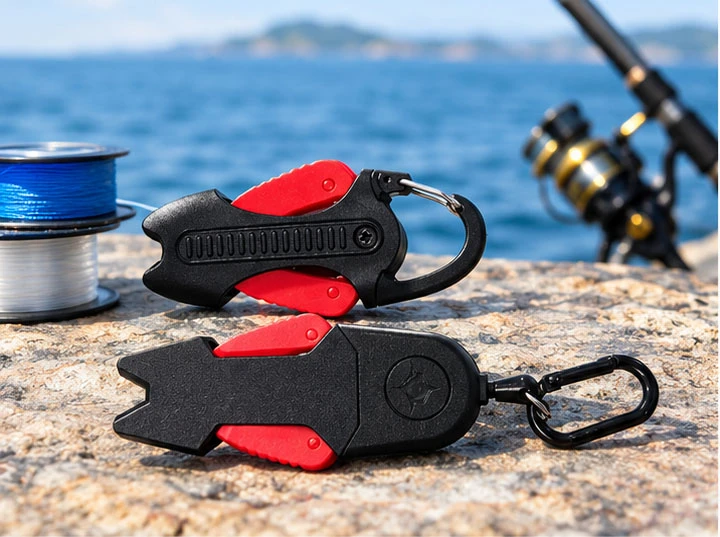
Decide which applications the product must support before comparing suppliers. Important considerations include blade material, cutting-edge design, overall dimensions, handle shape, portability, and accessories.
Braided PE line: Evaluate how effectively the blade engages flexible braided fibers without excessive slipping or repeated squeezing.
Monofilament line: Test whether the scissors produce a clean cut on the nylon line diameters relevant to your customers.
Fluorocarbon line: Check cutting performance across the intended diameter range instead of assuming that results on braided line will be identical.
Saltwater applications: Consider corrosion resistance across the entire assembly, including metal screws, pivot components, and attachments.
Portability: Determine whether clips, retractable tethers, or compact dimensions are important to the intended use.
Not every product needs every feature. A focused specification is often easier to manufacture, test, price, and maintain across repeat orders.
Prepare a Basic OEM Product Specification
Before requesting a quotation, prepare a short product brief covering the intended applications, preferred model, logo requirements, handle color, packaging, estimated order quantity, and target market. Include reference photos or a physical sample if you have a particular design in mind.
You do not need a complete engineering drawing for every standard product. However, the more clearly you describe the required result, the less likely you are to receive quotations for products that look similar but differ in important details.
2. Evaluate the Manufacturer's Actual Manufacturing Capabilities
A professional-looking website and a broad product catalog can be useful starting points, but neither proves that a company has the manufacturing capabilities your project requires. When evaluating a fishing scissors manufacturer, look beyond its sales presentation and ask how the product is actually made.
Look Beyond the Product Catalog
Start by understanding which production processes the company performs internally and which are handled by external suppliers. Outsourcing is not automatically a problem. Many established manufacturers use specialist partners for particular components or finishing processes. The important question is whether the company can control specifications, coordinate production, and maintain quality across the supply chain.
Ask how the manufacturer manages component sourcing, assembly, inspection, and changes to product specifications. For customized orders, clarify who is responsible for checking that the finished product matches the approved sample.
Assess Ceramic Processing Experience
For ceramic fishing scissors, relevant manufacturing knowledge is particularly important. Zirconia ceramic blades involve several processing stages, and the quality of the finished cutting edge depends on more than the name of the material.
Depending on the manufacturing arrangement, the process may include zirconia powder preparation, forming, sintering, precision grinding, edge finishing, dimensional inspection, and final assembly. Each stage can affect the properties and consistency of the finished component.
For example, the ceramic material may offer high hardness and wear resistance, but a poorly finished edge or an unsuitable blade geometry can still produce disappointing cutting results. Similarly, a well-made blade cannot compensate for poor alignment or inconsistent assembly.
Ask the supplier to explain its relevant production experience and how it evaluates finished blades. If some processes are outsourced, find out how incoming components are checked before they enter final assembly.
Check Production Capacity and Repeat-Order Reliability
Manufacturing capability also includes the ability to produce the same approved product repeatedly. A supplier may be able to deliver a small sample order but struggle to maintain consistent quality when quantities increase.
Useful questions include:
Can the manufacturer support your expected order volume?
How are production schedules planned and communicated?
Are approved specifications retained for future orders?
How are changes to materials, components, or production processes handled?
What arrangements are available for repeat orders and seasonal demand?
These questions are particularly relevant for distributors and established brands. The value of a supplier is not measured by its ability to complete one shipment alone, but by how reliably it can support the product throughout its commercial life.
3. Check Blade Materials and Cutting Performance
Blade material is an important purchasing consideration, especially when comparing ceramic fishing scissors with conventional metal alternatives. However, buyers should avoid treating material selection as a substitute for product testing. The practical question is whether the complete scissors meet the requirements of the intended application.
Understand Zirconia Ceramic and Stainless Steel
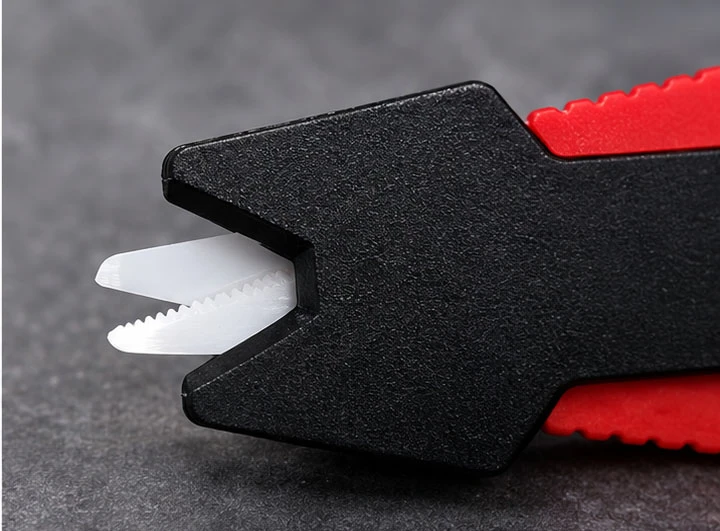
Zirconia ceramic and stainless steel offer different combinations of properties. Zirconia ceramic is known for its high hardness and wear resistance. The ceramic blade itself does not rust like a steel blade, making it an interesting option for fishing accessories used around water.
Stainless steel remains widely used because it offers a combination of cutting performance, toughness, and resistance to corrosion that varies according to the grade and manufacturing process. It is also generally more tolerant of impact than ceramic.
The following comparison can help buyers understand the main trade-offs.
| Evaluation factor | Zirconia ceramic | Stainless steel |
|---|---|---|
| Hardness | High hardness and good wear resistance | Depends on steel grade and heat treatment |
| Blade corrosion | The ceramic blade itself does not rust like steel | Corrosion resistance depends on material grade and conditions |
| Impact tolerance | More vulnerable to chipping or fracture under unsuitable impact | Generally more tolerant of impact |
| Maintenance | Low blade-corrosion maintenance requirements | Depends on the steel grade, use, and maintenance |
| Product positioning | Suitable for differentiated ceramic cutting tools | Suitable for a broad range of conventional cutting tools |
For OEM buyers, neither material should be selected based on a single advertised benefit. Consider the intended price point, expected use, cutting requirements, and customer preferences together.
Examine Blade Geometry and Edge Design
Two scissors made from similar materials can perform differently because of their edge geometry, blade alignment, and assembly. Buyers should therefore evaluate the actual cutting action rather than relying solely on a material specification.
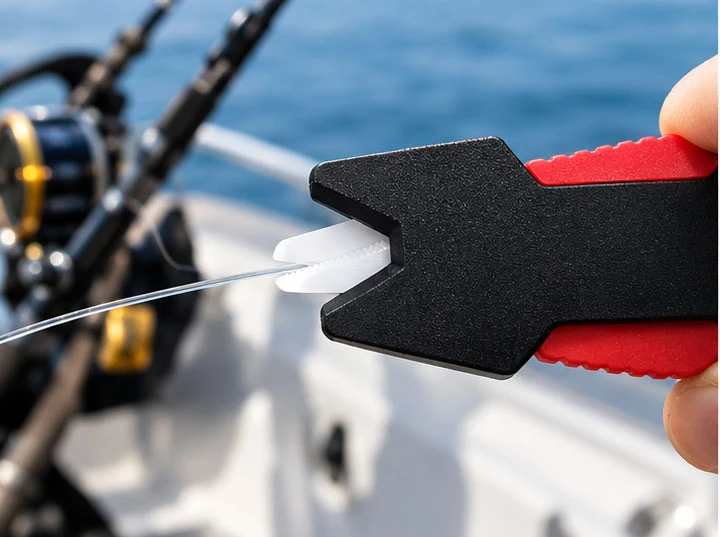
For braided PE line, examine whether the edge catches the fibers effectively or allows the line to slide away during cutting. Serrated designs may help engage flexible braided fibers, depending on their geometry and the intended application. A serrated edge is not automatically better for every type of fishing line.
Also check whether the blades meet correctly, whether the cutting action feels consistent, and whether the handles provide sufficient control. These details can influence the user experience as much as the blade material itself.
Test the Product on the Intended Fishing Lines
Request samples and test them with the line types and diameters your customers actually use. Include braided PE line, monofilament, and fluorocarbon where relevant to the product specification.
Use a consistent test method. Record the line type, diameter, number of cutting attempts, and any signs of slipping, fraying, or incomplete cuts. If the product is intended for a range of line sizes, test more than one diameter.
A supplier's general statement that its scissors are suitable for fishing line is not a substitute for evidence that the specific model meets your requirements. For a private-label project, agree on the expected cutting performance before approving the sample.
4. Evaluate OEM, ODM, and Private-Label Capabilities
For fishing tackle brands, wholesalers, and online sellers, customization can be an important part of product development. The challenge is determining what a manufacturer can provide using an existing product and what would require additional engineering, tooling, or production work.
Confirm What Can Actually Be Customized
Depending on the product and the manufacturer's capabilities, customization may include logo application, handle color, packaging, accessories, and selected product configurations.
Some changes are relatively straightforward. Others may affect component compatibility, manufacturing cost, production time, or minimum order quantities. Ask the supplier to distinguish between available standard options and modifications that require a separate feasibility assessment.
For example, changing a logo or retail packaging may be different from changing the handle structure or developing a new blade configuration. These requirements should not be treated as equivalent when comparing quotations.
Understand the Product Development Process
A clear OEM/ODM process helps reduce misunderstandings and makes it easier to control the project from the first inquiry to mass production.
Requirement review: Define the application, target market, product specifications, and expected order quantity.
Product configuration: Confirm the available model, blade design, handle options, accessories, and branding requirements.
Sample evaluation: Test the sample for cutting performance, assembly, appearance, and suitability for the intended use.
Specification approval: Confirm the agreed product details, packaging, labeling, and any relevant acceptance criteria.
Mass production and inspection: Manufacture against the approved specifications and perform the agreed quality checks before shipment.
For more detail on how these stages fit into a sourcing project, see the Fishing Scissors OEM Manufacturer Guide.
Clarify MOQ, Samples, Lead Times, and Packaging
Minimum order quantity is often one of the first commercial questions, but it should not be evaluated in isolation. A low MOQ may be useful for market testing, while a larger order may offer a different unit price or more customization options.
Before committing, confirm:
MOQ for standard and customized products
Sample availability, cost, and delivery time
Production lead time after specification approval
Logo application and packaging costs
Payment terms and shipping arrangements
Conditions for repeat orders and product changes
Do not assume that the lead time for a standard product will also apply to a customized order. Packaging development, component sourcing, and sample revisions can change the overall schedule.
5. Review Quality Control Before Placing a Bulk Order
Quality control should be discussed before an order is placed, not after the first shipment arrives. For a fishing scissors manufacturer, the relevant question is how the supplier checks the finished product and maintains consistency across production batches.
Ask About Incoming Material and Component Inspection
Find out how the manufacturer checks the materials and components used in production. Depending on the product, this may include ceramic blade specifications, handle dimensions, metal hardware, clips, tethers, and packaging materials.
Not every component requires the same inspection method. What matters is that the manufacturer has appropriate checks for the components that can affect product function, durability, appearance, or compliance with the agreed specification.
Inspect the Finished Product, Not Just the Blade
A ceramic blade can meet its material specification while the assembled scissors still have problems. Final inspection should therefore cover the complete product.
Blade alignment and opening and closing action
Cutting performance against the agreed line types
Handle assembly and overall finish
Clip, tether, or attachment function where applicable
Visible chips, cracks, assembly defects, or other damage
Packaging, labeling, and logo accuracy
Where appropriate, buyers can agree on inspection criteria before production begins. The acceptance criteria should be practical, clearly documented, and relevant to the product rather than based on vague expectations such as “premium quality.”
Check How Quality Is Maintained Between Batches
Sample approval is an important milestone, but it does not guarantee that every subsequent batch will be identical. Ask whether the manufacturer retains approved specifications, records inspection results, and has a defined process for managing material or process changes.
For recurring orders, it is useful to establish which product characteristics must remain unchanged and which can be modified only with prior approval. This is particularly important for private-label products, where customers expect the item they reorder to match the version they originally approved.
6. Compare Manufacturers Beyond the Lowest Unit Price
When several suppliers offer similar-looking fishing scissors, the lowest quotation can be tempting. However, the unit price alone does not reveal the total cost of sourcing or the risks associated with the order.
Calculate the Total Cost of Sourcing
In addition to the product price, consider customization, packaging, shipping, import-related expenses, inspection, and potential quality-related costs. A product that is inexpensive to purchase may become less competitive if it requires frequent rework, generates avoidable returns, or cannot be replenished consistently.
A useful starting point is:
Total Sourcing Cost = Product Cost + Customization + Packaging + Logistics + Quality-Related Costs
This is a simplified purchasing model rather than a complete accounting formula. Depending on the business, you may also need to include duties, warehousing, financing, and other operating expenses.
For an established brand or distributor, the goal is not necessarily to find the cheapest manufacturer. It is to find a supplier whose product quality, commercial terms, and operational reliability support the intended margin and customer expectations.
Compare Suppliers Using Consistent Criteria
Ask each shortlisted supplier to quote against the same product specification. Otherwise, differences in materials, packaging, accessories, or inspection requirements can make the prices misleading.
| Evaluation area | What to verify |
|---|---|
| Product quality | Sample cutting results, assembly, and finish |
| Manufacturing capability | Relevant production processes and component control |
| OEM/ODM support | Available customization and development arrangements |
| Quality control | Inspection procedures, records, and defect handling |
| Commercial terms | MOQ, unit price, payment terms, and additional charges |
| Supply reliability | Production schedules and repeat-order arrangements |
| Communication | Technical clarity, responsiveness, and documented commitments |
Using the same criteria for every supplier makes the decision more objective and helps explain why one quotation may offer better overall value than another.
7. Red Flags to Watch for When Choosing a Fishing Scissors Manufacturer
Not every warning sign means a supplier should be rejected immediately. However, certain behaviors deserve closer examination before you invest in samples, custom packaging, or a bulk order.
Unclear Product Materials or Unsupported Performance Claims
Be cautious if a supplier cannot clearly identify the blade material or explain the basic manufacturing and inspection processes relevant to the product. Claims such as “never dull,” “100% unbreakable,” or “cuts every fishing line perfectly” should be supported by credible evidence and clearly defined testing conditions.
For ceramic fishing scissors, high hardness does not mean unlimited impact resistance. Ceramic blades can chip or fracture if subjected to unsuitable loads or impacts, so accurate handling guidance is also part of responsible product communication.
Unclear OEM Terms
Pay attention when a supplier cannot explain its MOQ, customization charges, sample approval process, or production schedule. Vague terms can create problems once the project moves from quotation to production.
Before placing an order, document the product configuration, logo placement, packaging requirements, inspection criteria, and agreed delivery terms. If any specification changes after sample approval, establish how those changes will be reviewed and confirmed.
Marketing Claims Without Verifiable Evidence
Statements about extended service life, superior cutting performance, or corrosion resistance should be assessed carefully. Ask what was tested, under which conditions, and against which comparison product.
For example, a zirconia ceramic blade itself does not rust like steel, but a complete pair of scissors may still contain metal components that require corrosion management. The distinction matters when developing product descriptions for saltwater fishing markets.
A manufacturer that can discuss both the advantages and limitations of its product may be a more useful technical partner than one that relies entirely on broad promotional claims.
8. Questions to Ask a Fishing Scissors Manufacturer Before Ordering
Before requesting a formal quotation, prepare a list of questions that covers product capability, customization, quality, and commercial terms. The answers will help you determine whether a supplier is suitable for your specific project.
Do you manufacture fishing scissors in-house, and which processes are handled internally?
What blade materials and edge configurations are available?
Which fishing line types and diameters has the proposed model been designed to cut?
Can you provide samples for evaluation before bulk production?
Which OEM, ODM, and private-label customization options can you support?
What is the MOQ for standard and customized products?
How do you inspect cutting performance and finished-product quality?
How do you maintain consistency across repeat orders?
What are the sample, production, and shipping lead times?
What information do you need to prepare an accurate quotation?
Do not judge the answers only by how quickly a supplier responds. Look for specific, relevant information. A useful quotation should identify the product configuration, order quantity, customization scope, packaging, applicable costs, and expected schedule.
If a supplier needs additional information before confirming a price or technical detail, that is not necessarily a disadvantage. It may indicate that the company is trying to avoid quoting for an incorrectly specified product.
9. Why Consider MIDDIA for Ceramic Fishing Scissors OEM/ODM?
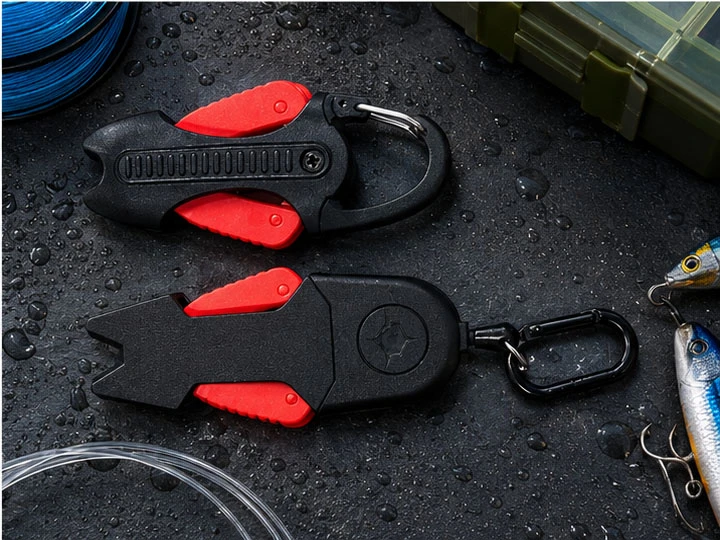
For buyers developing a ceramic fishing scissors product line, MIDDIA / 美帝亚 is a supplier worth considering for further evaluation. Its ceramic tool positioning is relevant to brands and distributors looking for alternatives to conventional metal-bladed fishing accessories.
Ceramic Manufacturing Knowledge
When evaluating a ceramic tool supplier, buyers should look for a clear understanding of zirconia ceramic processing and its relationship to finished-product performance. Material preparation, sintering, grinding, edge finishing, and final assembly all deserve attention when assessing a proposed product.
Rather than relying on a general statement about ceramic quality, request product-specific information and samples that allow you to assess the characteristics relevant to your market.
Fishing Scissors for Different Line Applications
MIDDIA's ceramic fishing scissors positioning is relevant to buyers sourcing tools for braided PE line, monofilament, and fluorocarbon applications. The most suitable model will depend on the intended line types, product configuration, and performance requirements.
For brands and distributors, evaluating the actual product is the best way to determine whether a model fits the target customer. Sample testing also provides a practical starting point for defining the product specification before a larger order.
OEM and Private-Label Cooperation
Private-label buyers often need more than a standard product. Logo application, handle color, product configuration, accessories, and retail packaging may all form part of the project, depending on the available options.
When discussing an OEM/ODM project with MIDDIA, explain your intended sales channel, target market, preferred product, estimated order quantity, and branding requirements. This information helps establish which options are appropriate and which details need further confirmation.
It is also worth discussing sample evaluation, production specifications, quality inspection, and repeat-order requirements at the beginning of the project. These decisions help establish a clearer basis for cooperation before commercial commitments are made.
Start with Your Product Requirements
You do not need to have every technical detail finalized before making an initial inquiry. A reference product, a description of the intended application, and an estimated order quantity are useful starting points.
If you are developing a new ceramic fishing scissors line, preparing a private-label product, or looking for a supplier for recurring wholesale orders, you can contact MIDDIA to discuss your ceramic fishing scissors project.
Include your preferred product configuration, logo and packaging requirements, target market, and expected purchasing volume. These details will make it easier to determine the next steps for sample evaluation and quotation.
10. Final Checklist for Choosing the Right Fishing Scissors Manufacturer
Before selecting a supplier, review the following checklist. It provides a practical summary of the main decisions involved in sourcing fishing scissors for wholesale, OEM, or private-label projects.
Product specifications match the intended application and target market.
Blade material and cutting performance have been evaluated using relevant fishing lines.
The manufacturer's relevant production capabilities have been verified.
OEM/ODM requirements, customization costs, and packaging details are clearly defined.
Samples have been tested and the final specifications approved.
Quality-control procedures and finished-product inspection criteria have been discussed.
MOQ, pricing, production lead times, and commercial terms are confirmed.
Repeat-order consistency and specification changes are covered by an agreed process.
Choosing a fishing scissors manufacturer is ultimately a decision about product performance, manufacturing capability, and supply reliability—not just the price of the first order. A structured evaluation process helps buyers compare suppliers fairly, reduce avoidable sourcing risks, and build a more dependable product line.
For businesses considering ceramic fishing scissors, start with a clearly defined application, evaluate samples carefully, and confirm the manufacturing and quality requirements before moving into mass production. These steps provide a stronger foundation for a successful OEM or private-label partnership.